VAT and SSAS commercial property
VAT on commercial property is one of the most complex areas of UK tax law, and it creates specific planning considerations when a SSAS is involved in a property purchase or lease. Understanding the VAT position before completing a transaction can avoid costly surprises — in some cases, an unexpected VAT bill of 20% of the purchase price.
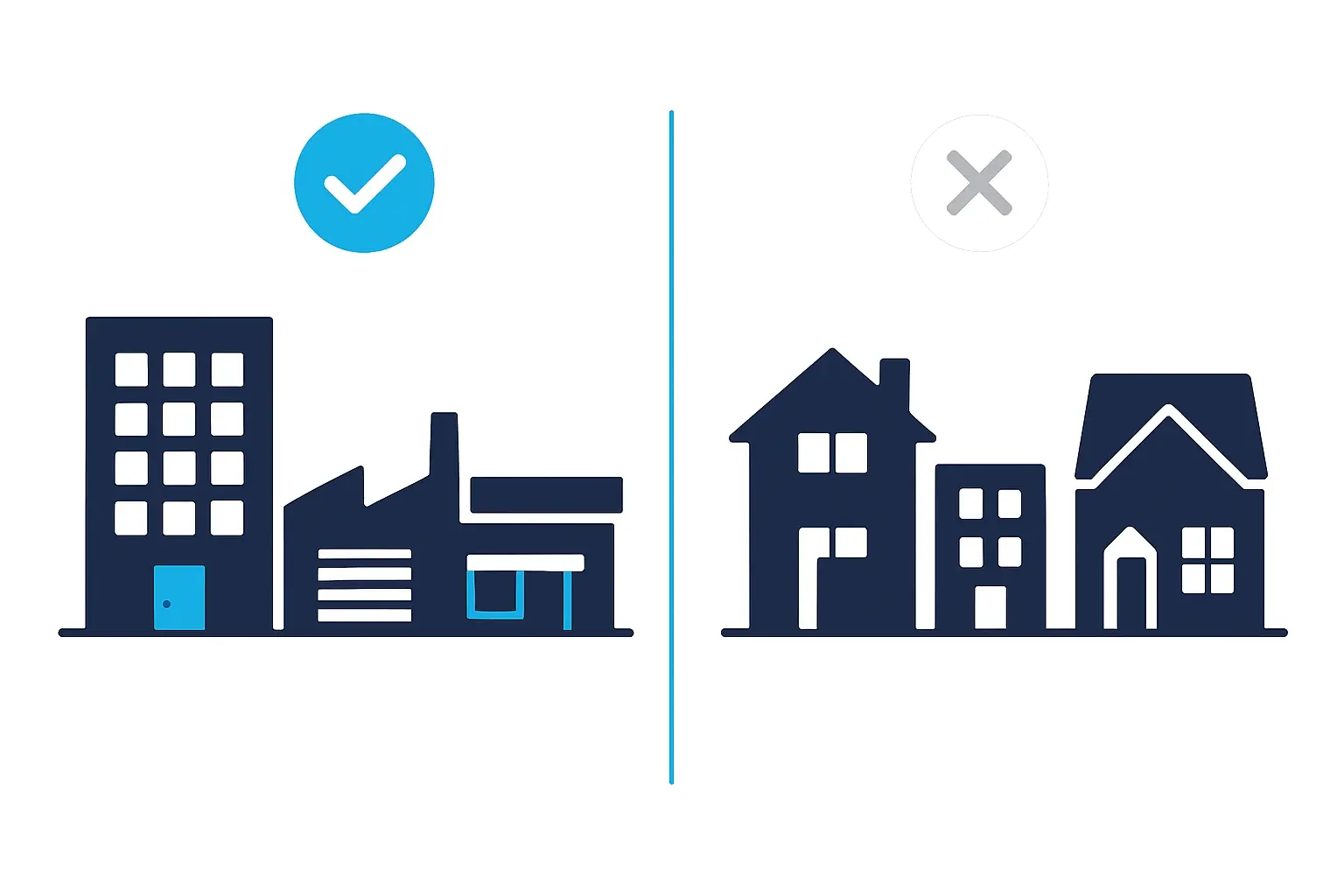
The Default VAT Position on Commercial Property
The default position under UK VAT law (VATA 1994) is that the sale or lease of land and buildings is exempt from VAT. This means no VAT is charged on the transaction, and accordingly the purchaser cannot recover any input VAT.
For most SSAS property purchases, this default position is straightforward: the scheme buys the property, no VAT is charged, and no VAT issues arise. However, the vendor has a powerful option — they can "opt to tax" the property, which transforms an exempt supply into a taxable one.
Opting to Tax: What It Means and Why Vendors Do It
A vendor or landlord can notify HMRC of an "option to tax" on a specific commercial property. Once the option is made, it is irrevocable for 20 years. The effect is that all subsequent sales and lettings of that property by the person who opted become subject to VAT at the standard rate (currently 20%).
Vendors opt to tax for one primary reason: to recover input VAT they have incurred on construction costs, refurbishment, or other property-related expenses. A commercial property developer who spent £100,000 + VAT on fitting out a commercial unit will want to reclaim that £20,000 VAT. They can only do so if they make taxable supplies — hence the option to tax.
What this means for a SSAS buyer
If you are purchasing a commercial property where the vendor has opted to tax, your SSAS will be charged VAT at 20% on the purchase price. For a £500,000 property, the VAT charge is £100,000. That £100,000 must come from somewhere — either from scheme funds (reducing the net investment) or by registering the SSAS for VAT and recovering it.
Key question to ask before exchange: Has the vendor opted to tax this property? Your solicitor should confirm this as part of pre-contract enquiries. If the vendor has opted to tax and your SSAS is not VAT-registered, you need a plan before exchange of contracts.
VAT Recovery Through the SSAS
A SSAS is a separate legal entity — a trust — and can register for VAT in its own right as a "taxable person" if it makes or intends to make taxable supplies. To recover the VAT paid on a commercial property purchase, the trustees typically need to:
- Register the SSAS for VAT with HMRC (as a separate registration from any of the member companies)
- Opt to tax the purchased property in the name of the SSAS trustees
- Charge VAT on rental income paid to the scheme (the tenant — often the sponsoring employer — pays VAT on rent)
- Submit quarterly VAT returns and recover the input VAT on the purchase
The net effect, done correctly, is that the SSAS can recover the £100,000 (in our example) in full through VAT returns. The scheme will then charge VAT to its tenant on rental income, which the tenant claims back through their own VAT registration — assuming the tenant is VAT-registered and makes taxable supplies.
The VAT registration timing issue
HMRC's general rule is that input VAT can only be recovered if the VAT-registered person held that status at the time of the supply. Registering for VAT after the property purchase and attempting to reclaim the VAT retroactively can be refused unless you can demonstrate prior intention to make taxable supplies. This is a critical timing issue: consider VAT registration before completion if you anticipate a VAT-bearing purchase.
Stamp Duty Land Tax on SSAS Property Purchases
Stamp Duty Land Tax (SDLT) applies to commercial property purchases by a SSAS in the same way it applies to any commercial property transaction. The SSAS (as a trust entity) is the purchaser for SDLT purposes.
For commercial property in England and Northern Ireland, the SDLT rates for 2025/26 are:
| Purchase Price Portion | SDLT Rate |
|---|---|
| Up to £150,000 | 0% |
| £150,001 to £250,000 | 2% |
| Over £250,000 | 5% |
Unlike the residential surcharges that apply to individual purchasers, a SSAS buying commercial property does not attract higher SDLT rates for pension schemes. The standard non-residential rates above apply.
For a commercial property in Scotland, Land and Buildings Transaction Tax (LBTT) applies. For Wales, Land Transaction Tax (LTT) applies. The rates differ from SDLT — confirm the applicable rate with your solicitor based on the property's location.
SDLT on new leases
If the SSAS is granting a new lease to a tenant rather than selling a freehold, SDLT may also apply to the lease. The calculation is based on the Net Present Value of the rental income over the lease term. Your solicitor and SSAS practitioner will advise on the SDLT liability for any lease arrangement.
The Interaction Between VAT Groups and a SSAS
A VAT group allows multiple entities under common control to register for VAT as a single entity, so that supplies between group members are outside the scope of VAT. This arrangement is commonly used by trading groups and their subsidiaries.
A SSAS cannot join a VAT group — it is a separate trust entity, not a body corporate. This has an important implication where the SSAS rents property to a company within a VAT group.
Scenario: SSAS landlord, VAT group tenant
The SSAS is VAT-registered and has opted to tax the property. It rents the commercial premises to a company that is part of a VAT group. The rent (plus VAT) flows from the VAT group to the SSAS. The VAT group can recover the input VAT on the rent through the group's VAT return, but because the SSAS is outside the group, the rental arrangement cannot be treated as an internal supply — VAT does apply, and returns must be managed accordingly.
Common Mistakes to Avoid
1. Not checking the vendor's VAT position before exchange
The most frequent and avoidable mistake. If the vendor has opted to tax and you have not made plans to recover the VAT, you face an unexpected cost of 20% of the purchase price. This should be confirmed at the heads of terms stage, not after exchange.
2. Registering the wrong entity for VAT
The sponsoring company's VAT registration cannot recover VAT incurred by the SSAS. The SSAS must have its own VAT registration if it is to reclaim input VAT on its property transactions. Confusing the two is a common error.
3. Failing to opt to tax before receiving VAT-bearing rent
If the SSAS is registered for VAT but has not opted to tax the property, it cannot charge VAT on rent — and therefore cannot recover input VAT under the partial exemption rules. The option to tax and the VAT registration need to work together.
4. Ignoring the Capital Goods Scheme
Commercial properties costing £250,000 or more (exclusive of VAT) fall within HMRC's Capital Goods Scheme. Under this scheme, the initial VAT recovery is subject to adjustment over a 10-year period if the use of the property changes (for example, if the property shifts from a taxable use to an exempt use). SSAS trustees should be aware of this adjustment mechanism.
5. Assuming VAT-exempt rental is straightforward
If the SSAS rents a property without opting to tax, the rental income is exempt from VAT. This sounds simple, but it means the scheme cannot recover any VAT it has incurred on related costs (maintenance, professional fees, etc.) because those costs are associated with an exempt supply. Partial exemption calculations can be complex where the scheme has mixed taxable and exempt supplies.
Professional advice is essential: VAT on commercial property is a specialist area. The interaction between SSAS trust law, property VAT rules, SDLT, and HMRC compliance creates complexity that genuinely requires specialist input. Do not proceed with a commercial property transaction through a SSAS without taking advice from both a SSAS practitioner and a property VAT specialist.
Summary
The majority of SSAS commercial property purchases are straightforward from a VAT perspective — the vendor has not opted to tax, no VAT applies, and SDLT is calculated at standard non-residential rates. Where the vendor has opted to tax, the SSAS may need to register for VAT separately, opt to tax the property itself, and manage quarterly VAT returns to recover the input VAT. The interaction with the sponsoring company's VAT position, and any VAT group arrangements, requires careful co-ordination. Addressing these points before exchange is far less costly than discovering them after completion.
Frequently Asked Questions
Do I pay VAT when my SSAS buys commercial property?
Only if the property has been opted to tax. Commercial property in the UK defaults to VAT-exempt, but the seller can opt to charge VAT (an ‘option to tax’). If the property is opted, the SSAS pays 20% VAT on the purchase price — reclaimable if the SSAS itself registers for VAT and opts to tax the property. This is the most common VAT trap in SSAS property purchases.
Can a SSAS register for VAT?
Yes. A SSAS can register for VAT if it makes taxable supplies above the VAT registration threshold (£90,000 from April 2024) or chooses to register voluntarily. Most SSAS schemes that own opted-to-tax commercial property register voluntarily so they can reclaim the VAT on purchase and ongoing costs. The registration is in the name of the scheme trustees.
What is opting to tax commercial property?
Opting to tax is a formal HMRC election (under VAT Act 1994, sch.10) that converts a VAT-exempt commercial property into one where VAT is charged on rent and sale price. Once made, the option lasts 20 years and applies to that specific person/entity holding the property. The SSAS as buyer, and the company as tenant, both need to consider whether to opt to tax their respective interests.
Can my SSAS reclaim VAT on the property purchase?
Yes, if the SSAS is VAT-registered and has opted to tax the property. The reclaim flows through the VAT return in the period of the purchase. Without VAT registration and the option to tax, no VAT recovery is possible — the 20% VAT becomes a permanent cost added to the property purchase price.
What VAT applies when my company pays rent to my SSAS?
If the SSAS has opted to tax, rent is charged at 20% VAT and the company tenant can reclaim that VAT (assuming the company itself is VAT-registered and the rent relates to taxable business activity). If the SSAS has not opted, rent is VAT-exempt and the SSAS cannot reclaim its purchase or running cost VAT. The decision to opt is a one-off, long-term commitment.
Do I pay Stamp Duty Land Tax when my SSAS buys commercial property?
Yes. SDLT applies to commercial property purchases by a SSAS at the standard non-residential rates (currently 0% on the first £150,000, 2% on £150,000 to £250,000, and 5% above £250,000). The SDLT is paid by the SSAS as buyer. There is no SSAS-specific SDLT relief.
What is Transfer of a Going Concern (TOGC) for SSAS property?
A TOGC is an HMRC mechanism that lets a property purchase happen without VAT being charged, even when the property is opted to tax, provided certain conditions are met — the buyer continues the same business activity, both parties are VAT-registered, and the buyer also opts to tax. For a SSAS buying a commercial property already let to a tenant, TOGC treatment is often available and avoids needing to fund the VAT element upfront.
Are there VAT exemptions for SSAS property in particular sectors?
No. SSAS schemes get no special VAT treatment by virtue of being a pension scheme. The VAT treatment of any commercial property purchase or rental income depends entirely on whether the property is opted to tax, the VAT status of the parties involved, and the underlying use of the property. For mixed-use property (residential element above commercial below), the VAT and the broader tax treatment both become significantly more complex — specialist advice is essential.
Disclaimer: VAT and property tax rules are complex and subject to change. This article provides an educational overview only and does not constitute tax or legal advice. Always seek professional advice specific to your circumstances before proceeding with a commercial property transaction.