Watch on YouTube · 3-minute explainer
SSAS vs SIPP at a glance
If you are a UK company director reviewing your pension options, you will quickly encounter two main choices: a Small Self-Administered Scheme (SSAS) and a Self-Invested Personal Pension (SIPP). On the surface, both allow you to invest your pension in a wider range of assets than a standard workplace pension. But the differences between them are significant — and for directors, those differences often matter a great deal.
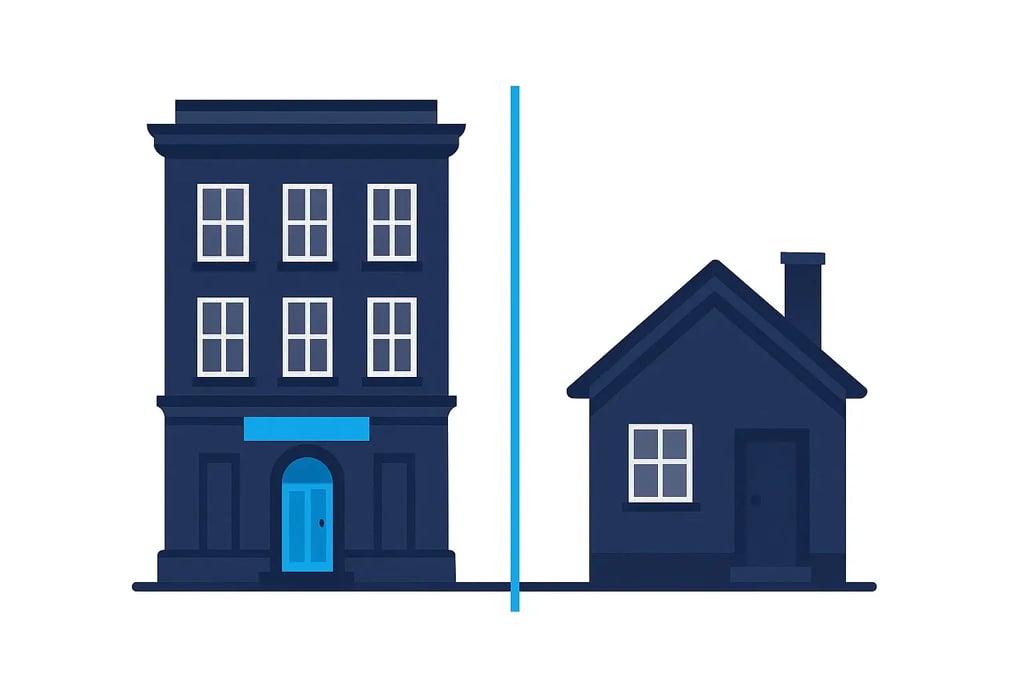
A SSAS is an occupational pension scheme set up by a UK limited company for its directors; a SIPP is a personal pension owned by an individual. The defining commercial difference is the SSAS loanback — only a SSAS can lend up to 50% of net assets back to the sponsoring company under HMRC rules. SSAS schemes are regulated by The Pensions Regulator and HMRC; SIPPs sit under FCA regulation.
Last updated: June 2026 · 11 min read · UK 2026/27 tax year
This guide explains how each works, compares them directly across the areas that matter most, and helps you understand which structure is likely to be the better fit for your circumstances.
Whether you are setting up your first director's pension or considering transferring existing pots into a new structure, the SSAS vs SIPP question deserves a thorough, informed answer. The right choice depends on your company structure, your appetite for control, and the specific features you need.
Side-by-Side Comparison
The table below compares SSAS and SIPP across the factors most relevant to UK company directors.
| Feature | SSAS | SIPP |
|---|---|---|
| Pension type | Occupational pension trust | Personal pension plan |
| Who can join | Up to 11 members, connected to sponsoring employer | Any individual — no employer link required |
| Trustee control | Yes — members are trustees; all decisions made by trustees | No — the provider is the scheme operator |
| Loanback to employer | Yes — up to 50% of fund value under HMRC rules | No — strictly prohibited |
| Commercial property | Yes — trustees purchase directly | Yes — via provider structure |
| Pooling funds | Yes — up to 11 members can pool | No — strictly individual |
| Employer contributions | Tax-deductible business expense | Personal tax relief; employer route less straightforward |
| Annual allowance (2025/26) | £60,000 | £60,000 |
| Setup fees (typical) | Higher setup investment | Generally lower or nil |
| Annual fees (typical) | Fixed annual fee | Percentage of assets under administration (varies by provider) |
The Loanback Facility: The Defining Difference
The loanback facility is the feature that most clearly distinguishes a SSAS from every other pension type in the UK. Under HMRC rules, a SSAS can lend money back to the sponsoring employer — the company that set it up.
HMRC's requirements for a valid loanback are:
- The loan cannot exceed 50% of the total SSAS fund value at the time of the loan
- The maximum term is five years
- Repayments must be made in equal annual instalments (20% of the capital each year)
- The loan must be secured by a first legal charge on assets of the sponsoring employer
- The interest rate must be at least 1% above the average of the leading banks' base lending rate
The interest paid on the loan flows back into the SSAS — meaning the employer pays interest to the scheme that the director also controls. A SIPP cannot do this under any circumstances.
Who Should Choose a SSAS?
A SSAS is likely the better choice if you:
- Are a UK company director paying Corporation Tax on company profits
- Want the employer to contribute directly to your pension as a business expense
- Want to purchase commercial property through your pension
- Want to pool pension funds with fellow directors to increase investment capacity
- Want access to the loanback facility as a potential source of short-term business capital
- Have existing pension pots you want to consolidate under your own control
- Are prepared to take on trustee responsibilities
Who Should Choose a SIPP?
A SIPP may be the better choice if you:
- Are a sole trader, freelancer, or employed professional without a sponsoring limited company
- Want a simple, low-cost pension with self-directed investments
- Have a relatively modest pension pot where percentage-based fees are cost-effective
- Prefer a provider-managed structure rather than taking on trustee responsibilities
Important Note on Fees: Always review the full fee schedule for any pension structure. Some providers quote a low headline fee but charge separately for every transaction — property purchases, loanbacks, investment switches, actuarial reports. Understand the total cost of ownership before committing.
Summary
For UK company directors with a corporation-tax-paying company, a SSAS typically offers meaningfully more flexibility, control, and tax efficiency than a SIPP. The additional administrative responsibility is real, but for directors who want to treat their pension as an active part of their wealth strategy, the SSAS is designed precisely for that purpose — within HMRC rules.
If you currently hold pension savings in a SIPP or any other arrangement, you can generally transfer those funds into a SSAS once it has been registered with HMRC. The transfer process is straightforward and there is no immediate tax charge on a transfer between registered pension schemes. Some directors find that consolidating everything into a SSAS gives them a clearer picture of their total pension wealth and greater control over how those funds are invested.
When does a SSAS make more sense than a SIPP?
A SSAS is the right choice when at least one of the following applies to your business and pension goals:
- You want to lend pension money back to your trading company. SSAS is the only HMRC-sanctioned UK pension that permits a loanback to the sponsoring employer (Finance Act 2004, s.179; PTM123200). A SIPP cannot make this loan.
- You want to buy your trading premises through the pension. Both vehicles can hold commercial property, but a SSAS does so with the directors as trustees in direct legal control of the asset, whereas a SIPP holds property via the provider's bare trust.
- You want to pool pensions across family or business partners. A SSAS can have up to 11 members in a single trust, allowing combined buying power for a property purchase. A SIPP is always a single-member arrangement — even ‘family SIPPs’ are technically separate contracts.
- You want trustee-level control of the bank account and investments. SSAS member-trustees hold the scheme bank account and execute investment decisions directly. SIPP providers retain custody and execute on your instruction.
- You want to make large employer contributions in a single year. Both structures share the same Annual Allowance (£60,000 for 2025/26 plus carry forward), but the SSAS contribution mechanism through the company is the cleaner route for large director contributions tied to Corporation Tax planning.
When is a SIPP the better choice?
A SIPP is usually the right answer when:
- You don't have a UK limited company. A SSAS requires a sponsoring employer (limited company or LLP). Sole traders, partnerships and individuals without a corporate structure can only use a SIPP.
- You want a simple, low-touch personal pension. A SIPP is administered by the provider; the saver makes investment choices but the operational compliance burden sits with the provider. A SSAS requires the trustees to engage with HMRC and The Pensions Regulator directly (usually via a scheme administrator firm).
- You have no plans to lend to a business or buy commercial property. SIPPs cover the same investment universe as SSAS for listed shares, funds, bonds, and cash. If you don't need loanback or pooled-trust property purchase, a SIPP gives you the same tax wrapper with less administrative overhead.
- You only have personal earnings to contribute. Personal contributions are limited to your relevant UK earnings (Finance Act 2004, s.190). For most director-shareholders this means salary, not dividends. If you don't have a company contributing on your behalf, a SIPP is functionally equivalent.
Can I have both a SSAS and a SIPP?
Yes — many directors hold both. Each scheme has its own Annual Allowance contribution tracking but the £60,000 Annual Allowance is a per-individual limit across all your registered pensions, not per scheme. A common pattern is: a personal SIPP holding listed investments managed online, and a SSAS used for the loanback and for purchasing the trading premises. The two work alongside each other under HMRC’s registered pension framework.
Switching from a SIPP to a SSAS
You can transfer all or part of an existing SIPP into a new SSAS once the SSAS has been registered with HMRC. The transfer is a tax-neutral event — no Income Tax, no Capital Gains Tax. Three things to check first: (1) does your SIPP have any guaranteed annuity rates or safeguarded benefits that would be lost on transfer (most modern SIPPs do not); (2) is your SIPP holding any in-specie assets that need to be sold or transferred in-specie; (3) does the timing align with your contribution and investment plans for the year. The full transfer process typically takes four to twelve weeks depending on the SIPP provider.
Frequently Asked Questions
Is a SSAS better than a SIPP?
Neither is universally better — they suit different situations. A SSAS is better for limited company directors who want to lend pension money to their business, pool pensions with co-directors or family, or hold commercial property in direct trustee control. A SIPP is better for individuals without a limited company, anyone who wants a low-touch personal pension, or savers whose investment plans don’t require loanback or pooled property purchase.
What's the main difference between a SSAS and a SIPP?
The defining difference is the loanback. Only a SSAS can lend up to 50% of its net asset value back to the sponsoring company on commercial terms (Finance Act 2004, s.179). A SIPP cannot make any loan to a connected party. Other differences flow from this: SSAS is trust-based with member-trustees; SIPP is contract-based with the provider holding custody.
Can a SIPP lend money to my company?
No. A SIPP cannot lend to the saver, to a connected company, or to any related party. Such a loan would be an unauthorised payment under HMRC rules and would trigger tax charges of up to 55% of the loan value. If you want to use pension capital to support your trading company, the only HMRC-sanctioned route is a SSAS loanback.
Is a SSAS more expensive than a SIPP?
The cost profile is different rather than universally higher. A SIPP charges through provider fees that typically scale with fund value (a percentage of assets under administration). A SSAS uses a scheme administrator firm on flat or activity-based fees. The crossover point depends on fund size, transaction volume, and what investments you hold — but for a SSAS with significant assets, commercial property, or active trading, the cost profile is often more predictable than a percentage-of-assets SIPP charge.
Can my SSAS and SIPP both invest in the same property?
Yes — co-investment is permitted, though it requires careful documentation. Each scheme’s share of the property must be properly recorded, the rent must be apportioned correctly, and any sale or refinancing has to comply with both schemes’ trust terms. Most directors who run both schemes use the SSAS for any commercial property co-purchase because the trustee structure makes the legal ownership cleaner.
Does SSAS or SIPP have a higher Annual Allowance?
The Annual Allowance is the same for both — £60,000 for 2025/26, with carry forward of unused allowance from the previous three tax years. The Annual Allowance applies to the individual across all their registered pensions, not per scheme. For very high earners, the Tapered Annual Allowance reduces this floor (down to £10,000 for adjusted income over £360,000) regardless of which pension structure you use.
Can I move from a SIPP to a SSAS without losing tax relief?
Yes. A transfer between two registered UK pensions is a tax-neutral event — no Income Tax, no Capital Gains Tax, no impact on contribution allowances. Tax relief already given on the SIPP contributions is preserved when the funds move to the SSAS. The transfer needs to be a recognised transfer under HMRC rules (Finance Act 2004, s.169) and is initiated by the receiving scheme administrator.
If I have a SSAS, do I still need a SIPP?
Most directors don’t need both, but some choose to keep both for diversification of administration. The SSAS handles the structurally complex part — loanback, commercial property, pooled family pensions. A SIPP can hold the more straightforward listed-investment portfolio with online execution and reporting. Whether to consolidate is a judgement call about administrative simplicity versus operational flexibility.
Disclaimer: This article is for educational purposes only and does not constitute financial, legal, or tax advice. SSAS Pension (ssaspension.co.uk) is a trading style of Holtram TLPI Ltd, an HMRC-registered Scheme Administrator. Holtram TLPI Ltd is not authorised by the Financial Conduct Authority. Pension and tax rules are subject to change and depend on individual circumstances. Always consult a qualified financial adviser before making pension decisions.